

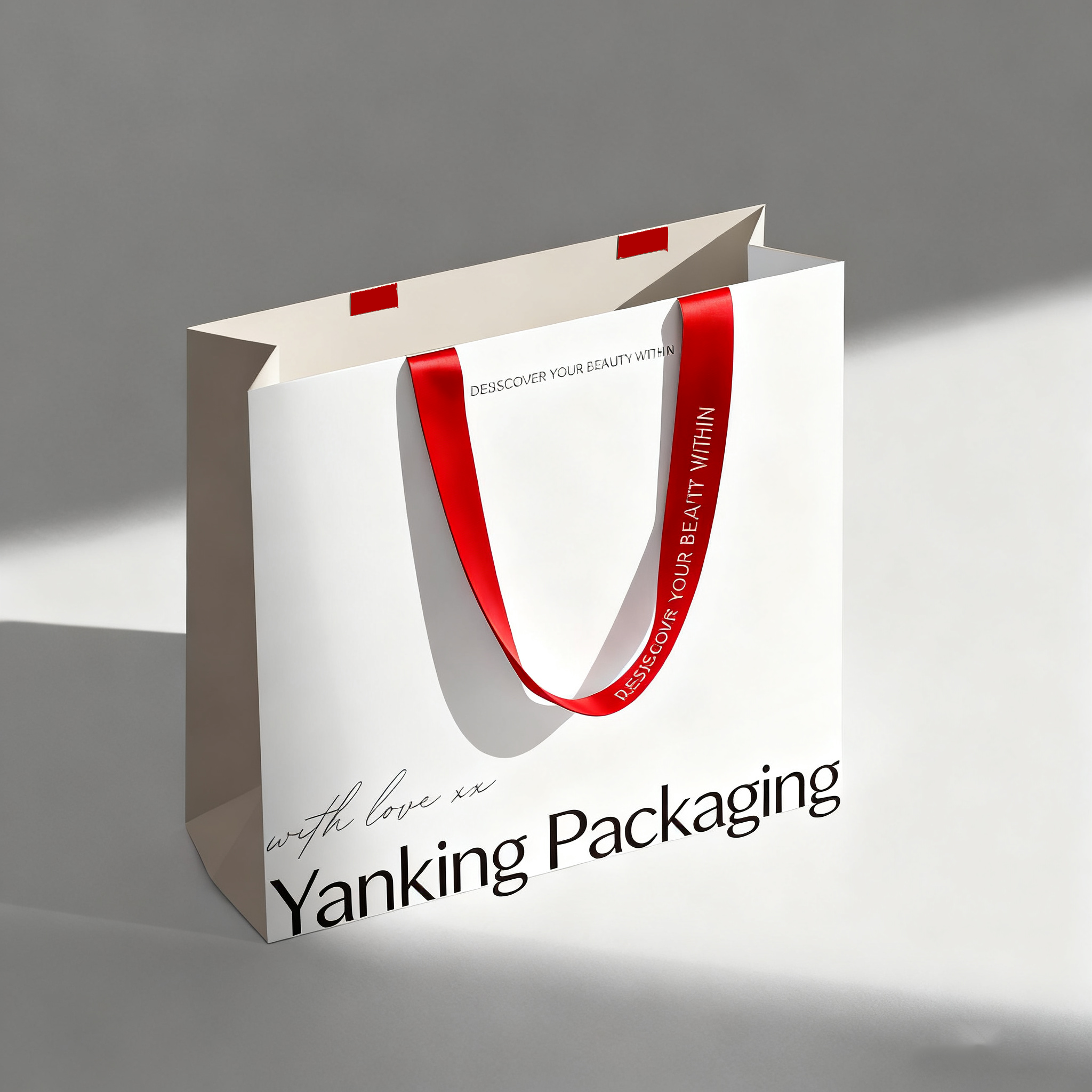
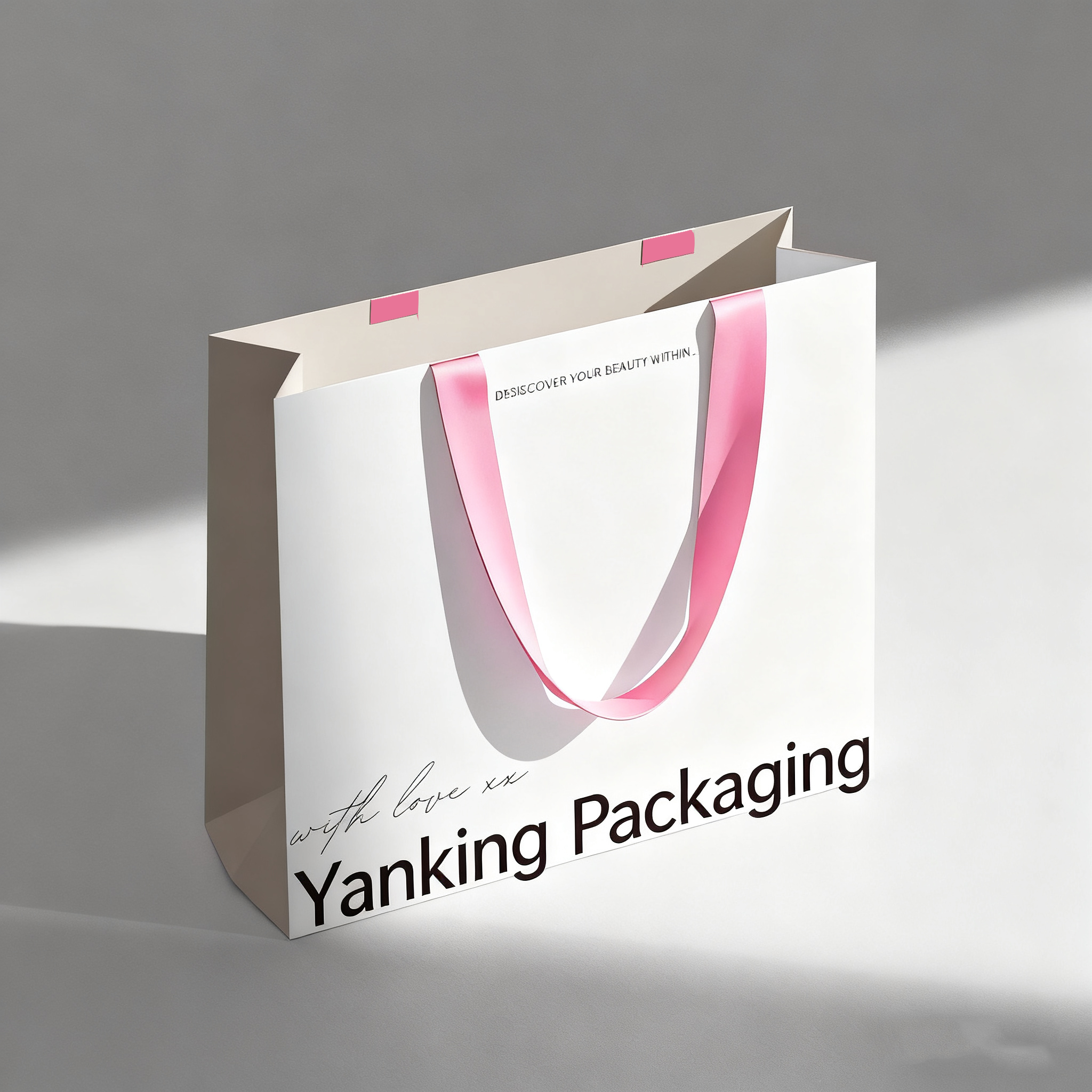




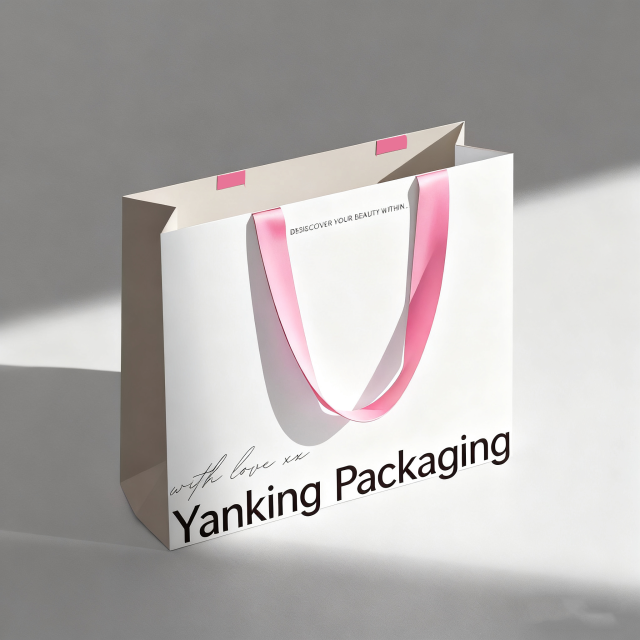
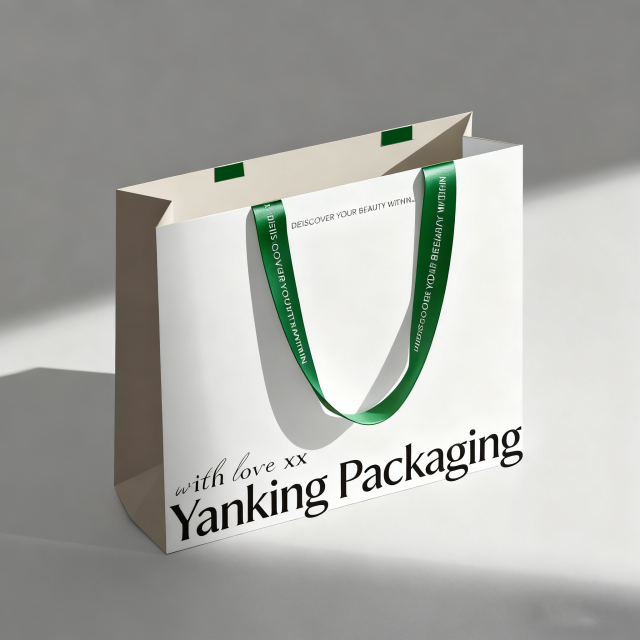
Handles, bands and ties are the first thing a customer touches, and they decide whether a bag reads as finished or merely printed. This ribbon is made for that moment: recyclable art paper, embossed with a fine matte grain, stamped in gold foil and sealed under a clear laminated layer, so it stays soft in the hand and resists the scuffs that show up first on bare paper. We print the logo by offset and emboss it in register, which keeps every run locked to the artwork you approved. The white art paper base takes gold foil cleanly, and large and medium widths let a single design run across a whole bag range. It is a finishing element rather than a bag in its own right — the detail that turns custom ribbon handle paper bags into something a customer keeps after the purchase.
- Boutique and flagship stores. The handle is the part of the bag a customer holds on the walk home, which is why luxury boutique packaging suppliers put their mark there rather than only on the panel. - Cosmetics and skincare sets. Cosmetics paper bag manufacturers use a matching ribbon to tie a gift set, a sampler or a launch kit back to the bag it arrived in. - Counter and checkout gifting. On luxury cosmetics shopping bags, a foiled handle signals the purchase was a gift before the bag is even opened — exactly what a counter team wants at peak season. - Corporate gifting and events. Conference bags, press kits and client gifts read as planned rather than promotional when the handle carries an embossed mark instead of a printed strip. - Seasonal store programmes. Holiday and campaign bags can swap foil and print colour on the same ribbon construction, so the range changes without a new die. - Gift wrap, box bands and belly bands. The same ribbon wraps a rigid box or closes a folded gift, which keeps a gifting set visually tied together. - Wholesale bag programmes. For wholesale art paper gift bags supplied into store chains, one ribbon design across two widths covers the whole size run. - Sampling and mailer kits. Short lengths in medium width finish small parcel-opening kits where a full bag is not involved.
The sheet. Art paper is a smooth, coated stock chosen because it holds fine detail: foil edges stay crisp and an emboss reads sharply instead of blurring into the fibre. It is recyclable, and the weight is matched to the handle load the bag will carry so the ribbon folds without cracking at the crease. The emboss and the foil. A die presses your pattern, or a house texture, into the sheet, then gold foil is stamped in register so the metal sits inside the texture rather than floating on top of it. The finished surface is low-sheen, which keeps it from glaring under store spotlights and photographs flat rather than hot. The lamination and the print. A clear film is bonded over the printed and foiled surface — the layer that resists abrasion and slows colour fade through packing, shipping and weeks on a display shelf. This is the sheet and finish luxury boutique packaging suppliers specify when a ribbon has to sit beside rigid boxes and printed collateral without looking like a different supplier made it. - Gold foil with depth behind it. The foil is stamped into an embossed surface instead of sitting flat on the sheet, so the mark catches light along its edges and still reads where a thumb rests on the handle. - Texture you feel before you read the logo. The matte emboss gives the ribbon a dry, fabric-like grain that separates a considered bag from a printed one at arm's length — which matters when it sits in a window or on a counter. - Lamination that keeps its colour. A clear protective film takes stacking, trolleys and constant handling, and slows the fading that dulls unlaminated paper under strong display lighting. - Consistency at the fifth reorder, not just the first. Offset registration is set once and repeated from retained files, so a reprint of your art paper bags with ribbon returns matching the batch you already shipped. - A recyclable paper core. The ribbon is built on recyclable art paper, so the material story stays consistent from the bag body through to the handle. - Planned around assembly, not just appearance. Width, emboss pattern and foil position are set with the fold and glue allowance in mind, which keeps offset printing paper bags running cleanly on the finishing line. - Two widths, one visual signature. Large and medium cover boutique shoppers, cosmetics carriers and box bands, so a wholesale art paper gift bags range can look like one family across sizes.
A large width suits a boutique shopper or a gift bag where the handle is meant to be seen: it fills the hand, reads as substantial from a metre away, and holds up on bags that are carried rather than tucked into a tote. Medium is the better fit on smaller carriers such as luxury cosmetics shopping bags, box bands and belly bands, where a broad handle would crowd the artwork or overwhelm a narrow bag. Two checks settle it quickly. Look at the handle span and how the ribbon folds: it has to lie flat against the bag without buckling, and an over-wide ribbon will stand proud on a narrow handle. Then look at the logo — a mark with fine type needs more width to stay readable than a solid block mark does. We test both on the sample, and when a range covers several bag sizes, one ribbon specification per size is usually tidier than forcing a single width across all of them.
| Base material | Recyclable art paper |
| Surface | Matte embossed texture |
| Foil | Gold foil stamping, registered to the emboss |
| Protective layer | Clear lamination |
| Printing | Offset printing, CMYK and Pantone spot colour |
| Logo | Printed and embossed from your artwork |
| Widths | Large and medium |
| Base colour | White art paper, with custom colour by print |
| Recyclability | Recyclable art paper base |
| Typical use | Bag handles, gift wrap, box bands and belly bands |
| Customization | Width, logo placement, emboss design, foil and lamination |
Bulk runs for wholesale art paper gift bags follow the approved sample, not the artwork file. Paper, foil and laminating film are checked in before the line starts, and the press is set with a trial pass so foil registration and emboss depth are confirmed on the actual sheet rather than assumed from the previous job.
Through the run we watch the things that fail quietly: emboss depth drifting, foil coverage thinning at fine detail, registration creeping along a long repeat, and lamination lifting at the cut edge. Widths and cut ends are measured against the approved specification, and finished ribbon is inspected for scuffs, creases and colour variation before it is counted and packed.
Surface and registration are the two checkpoints that matter most here. A ribbon is handled more than a box is — folded, knotted, pulled — so a mark sitting half a millimetre out is far more visible on a handle than on a flat panel. Production files stay on record after shipment, which is what lets a cosmetics paper bag manufacturer reorder the same handle a season later and get the same result, and why a repeat of offset printing paper bags comes back consistent rather than merely similar.



Compliance paperwork should not hold up a launch. The paperboard we buy in for production goes through third-party laboratory testing, and results have met the requirements set for each programme: PFAS, SVHC under REACH, RoHS heavy metals, EN 71-3, CPSIA and ISO 8124-3, along with phthalates, halogen and formaldehyde. FSC chain-of-custody documentation is available where your programme needs certified fibre. Tell us your destination market and what your buyer requires, and we will confirm which reports apply and send copies with your quotation.