Product Overview
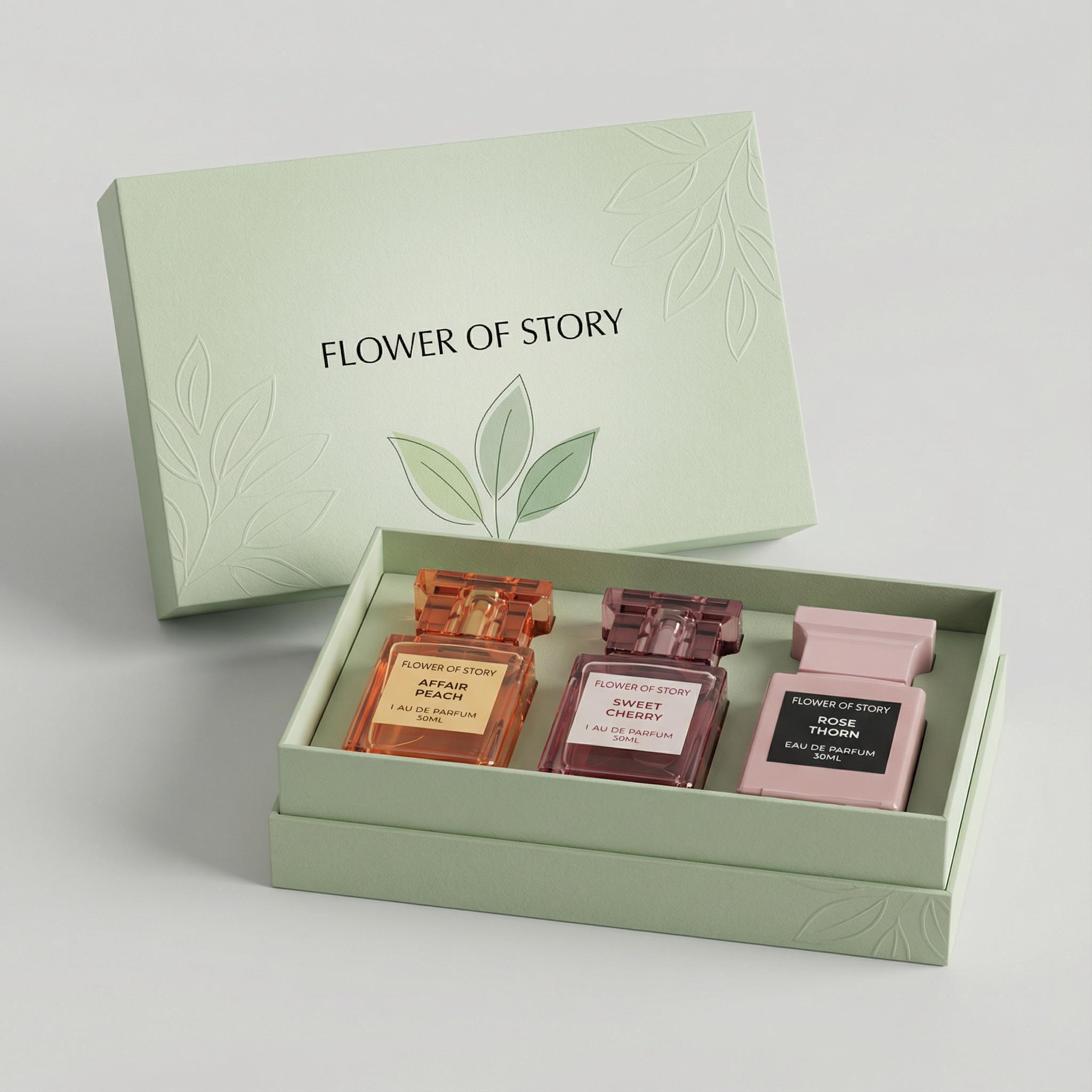
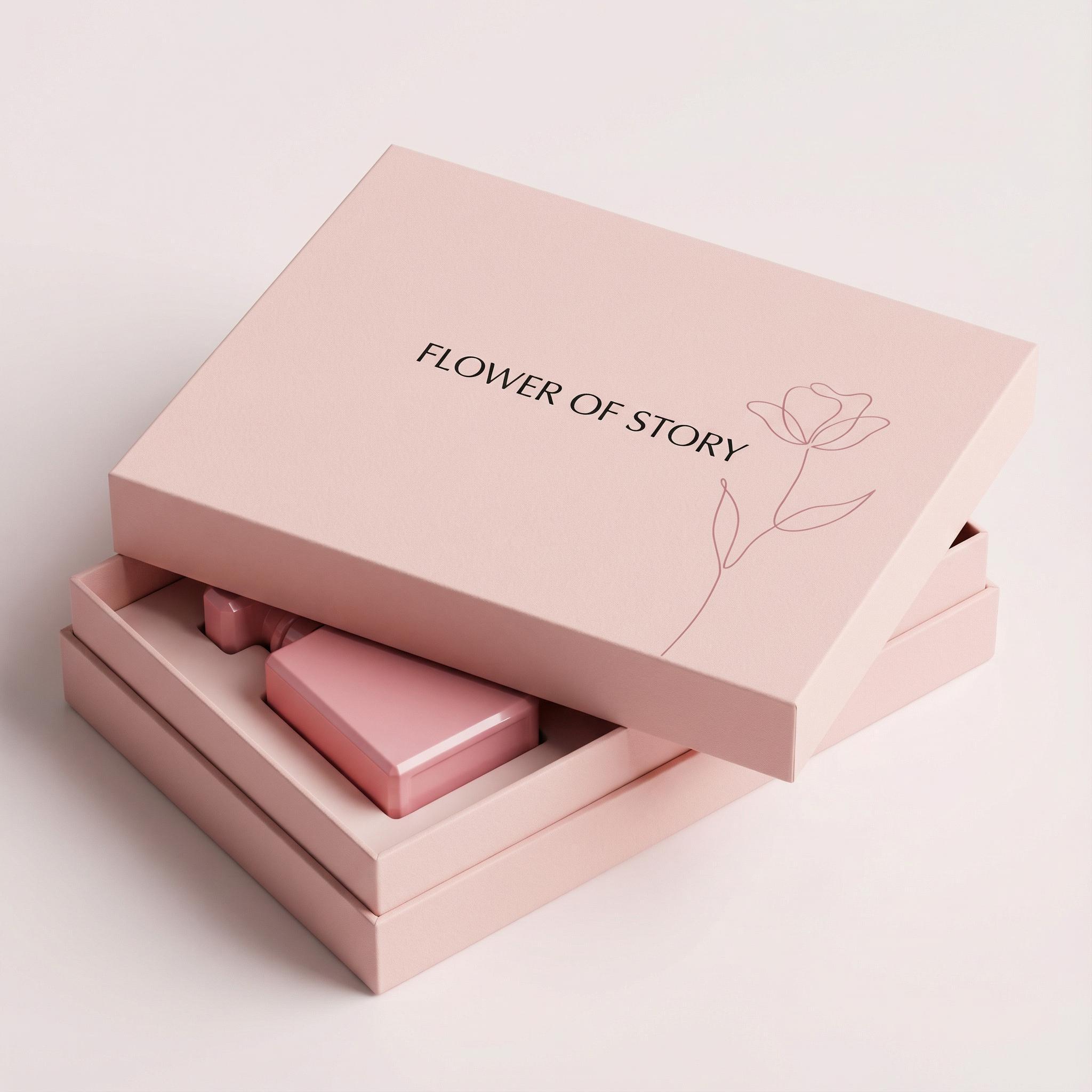
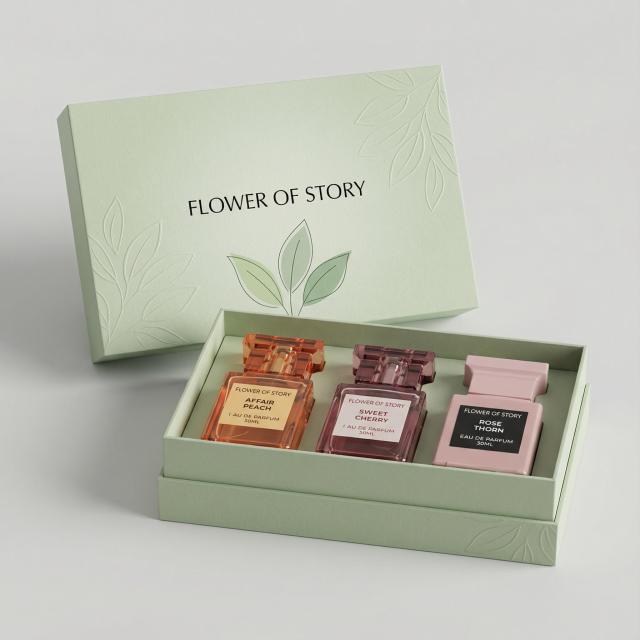
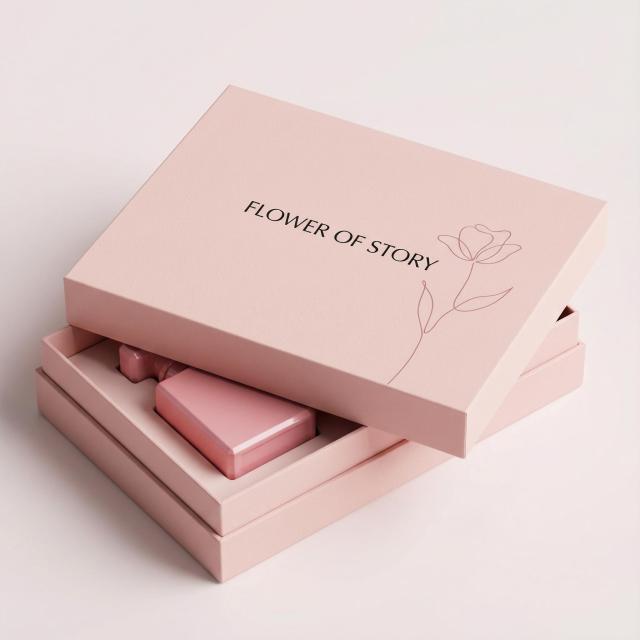
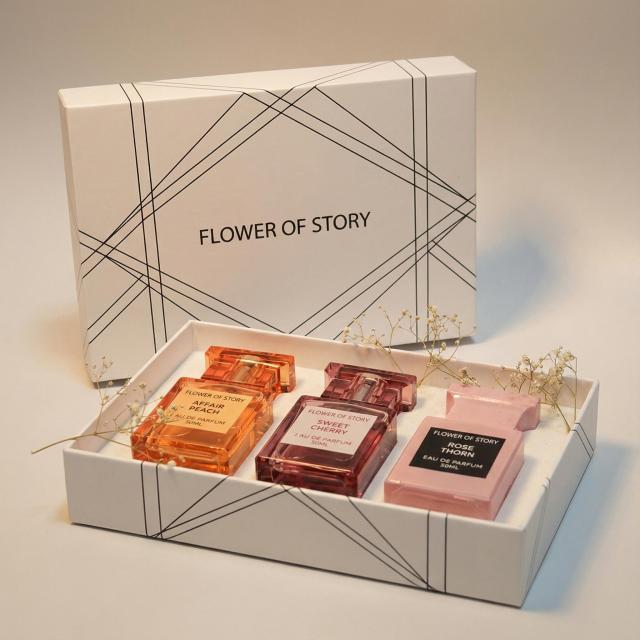
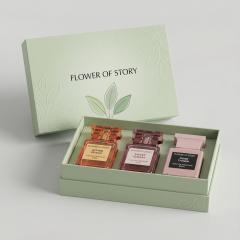
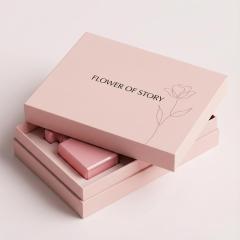
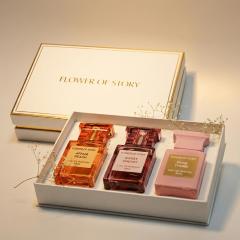
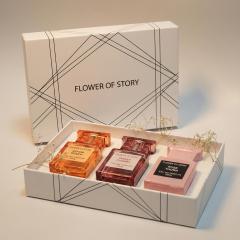
This square perfume box is made as a two-piece set: a rigid base that holds the bottle and a lift-off lid that settles into a friction fit. The printed wrap is recycled paper over a rigid core, so the surface carrying your artwork is recycled while the board keeps the walls straight and the corners square through packing, shipping and handling.
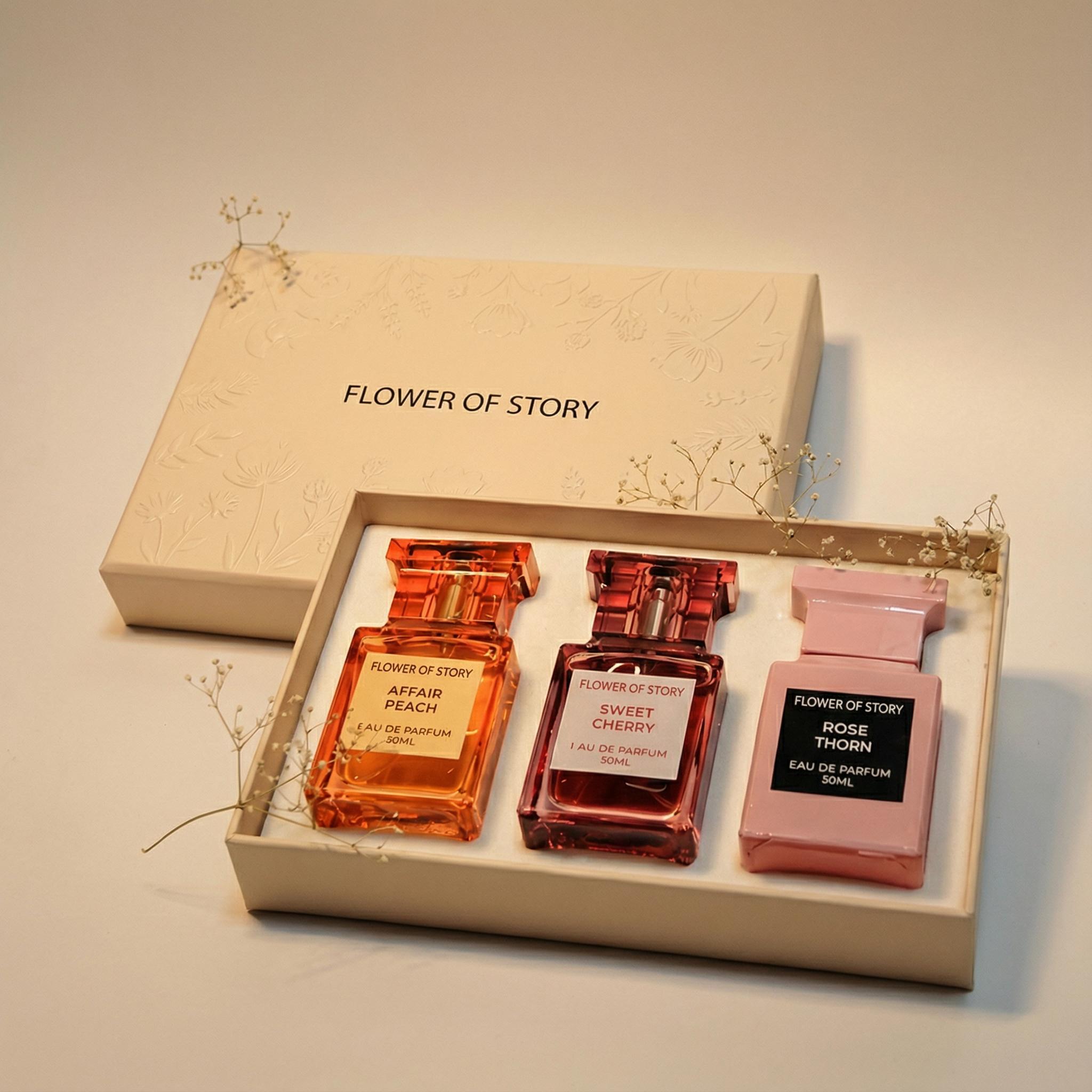
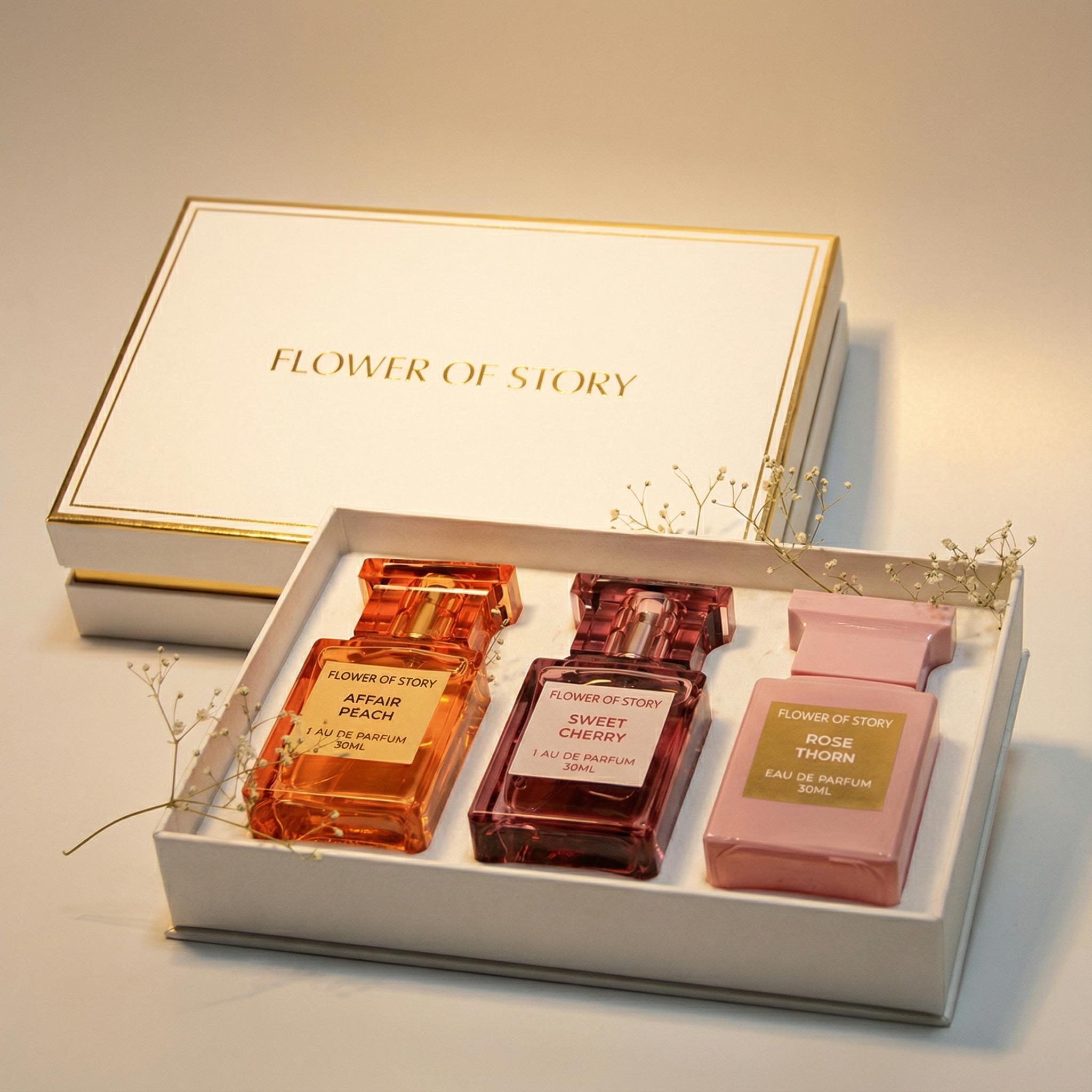
Each lid and base is finished by hand. That is where the reveal line comes from — the small, even gap between lid and base that makes a box look considered rather than assembled — and it is why a reorder six months later still matches the first run. Panels print full-bleed in CMYK, and the lid can carry an embossed logo, a hot-stamped mark or a matte lamination depending on how the box should feel in the hand.
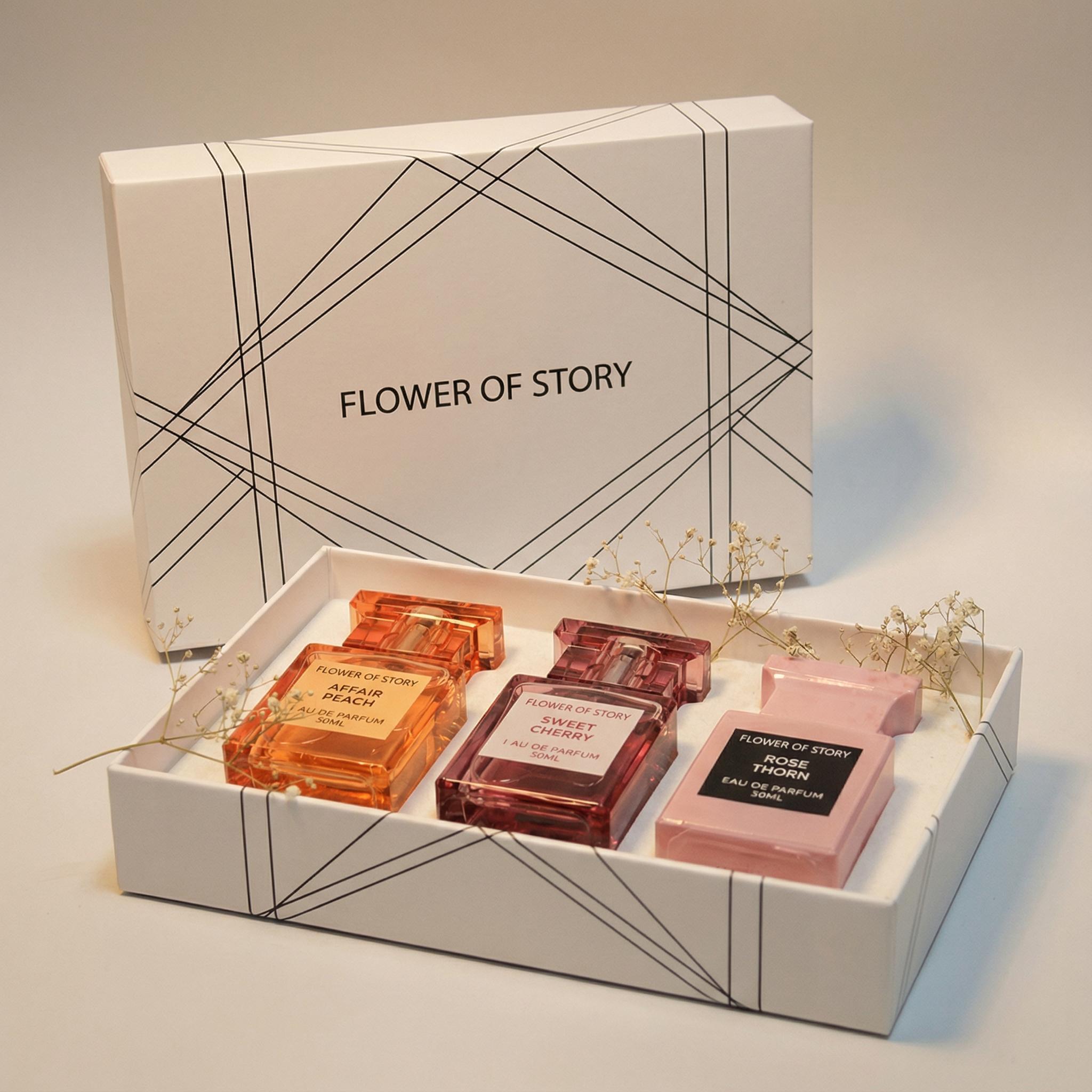
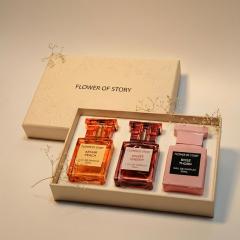
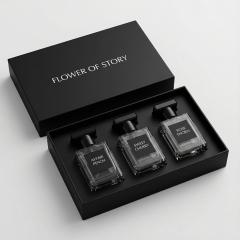
Dimensions and board thickness on these custom lid and base boxes come from your bottle rather than from a stock list, so the box is right-sized instead of propped up with void fill. Inserts and wraps can be planned inside the same dieline, which keeps the bottle steady and the inside of the lid clean.
Fragrance houses use this as the primary pack for a launch, contract manufacturers use it to pack gift sets, and merchandising teams use it where a luxury perfume box has to survive a planogram, a parcel network and a customer's hands without losing its edges. As rigid perfume packaging it handles the two jobs a fragrance pack has to do at once: present the bottle and protect it.
A closure that behaves. The lid and base fit is set so the box resists the compression of stacking while still opening with light pressure. That balance is what keeps a box presentable after a customer has opened and closed it on a display shelf. Hand assembly where it shows. Edges are wrapped by hand, so the seam sits on the face you choose and the reveal stays even across the run. Seam variance is the difference between a box that looks handmade and one that looks unfinished. Print and finish without a fight. Full-coverage CMYK panels give the artwork room, and embossing, hot stamping or matte lamination layer on top without muddying the print underneath. Right-sized, not padded. Because dimensions and board come from the bottle, there is less void space inside, the bottle sits steady, and secondary packing gets simpler. One dieline, many bottles. The same construction standardises across a fragrance family, so the shelf block stays consistent and procurement deals with one specification instead of five. Fast at the packing table. The box assembles by hand without tools, which saves labour minutes when a fulfilment team is working through volume. A material story you can use. Brands shortlisting recycled perfume packaging suppliers usually want both a lower-impact substrate and a box that still looks premium on shelf; keeping the recycled content in the wrap and the strength in the rigid core is how this box delivers both. That is the practical value of rigid perfume packaging built this way.
Material and Recycled Content
- The board carries the structure; the paper carries the colour and the hand-feel. - What keeps it rigid. The lamination bonds the recycled sheet to the core, so corners stay square and walls do not bow under stacking or handling. That is what lets rigid perfume packaging travel in a parcel rather than only in a gift bag. - The hand-feel difference. Recycled stock has a slightly drier, more paper-like surface than a coated art sheet. It takes matte lamination cleanly and, left plain, reads closer to unbleached paper. - Where the sustainability wording needs care. Recycled content, biodegradability and any claim you publish depend on the full construction — wrap, board, lamination, inserts and any ribbon. Tell us the wording your brand or your distribution channel requires and we will confirm which parts of the box sit inside it. - Colour on recycled stock. Recycled paper can shift a colour slightly compared with a coated sheet, so brand colours are checked against a physical proof at sampling rather than signed off on a monitor. - Why buyers compare recycled perfume packaging suppliers so carefully. The usual worry with wholesale square perfume boxes is that recycled means thinner, softer or less printable. Here the recycled content is in the wrap and the rigid core does the protecting, so print quality and structure are not in competition. - Weight follows the bottle. A heavy flacon and a small travel bottle do not need the same wall, and board thickness is chosen with that in mind.
Finishes and Surface Effects
Three finishes do most of the work on this box, and they can be used alone or together.
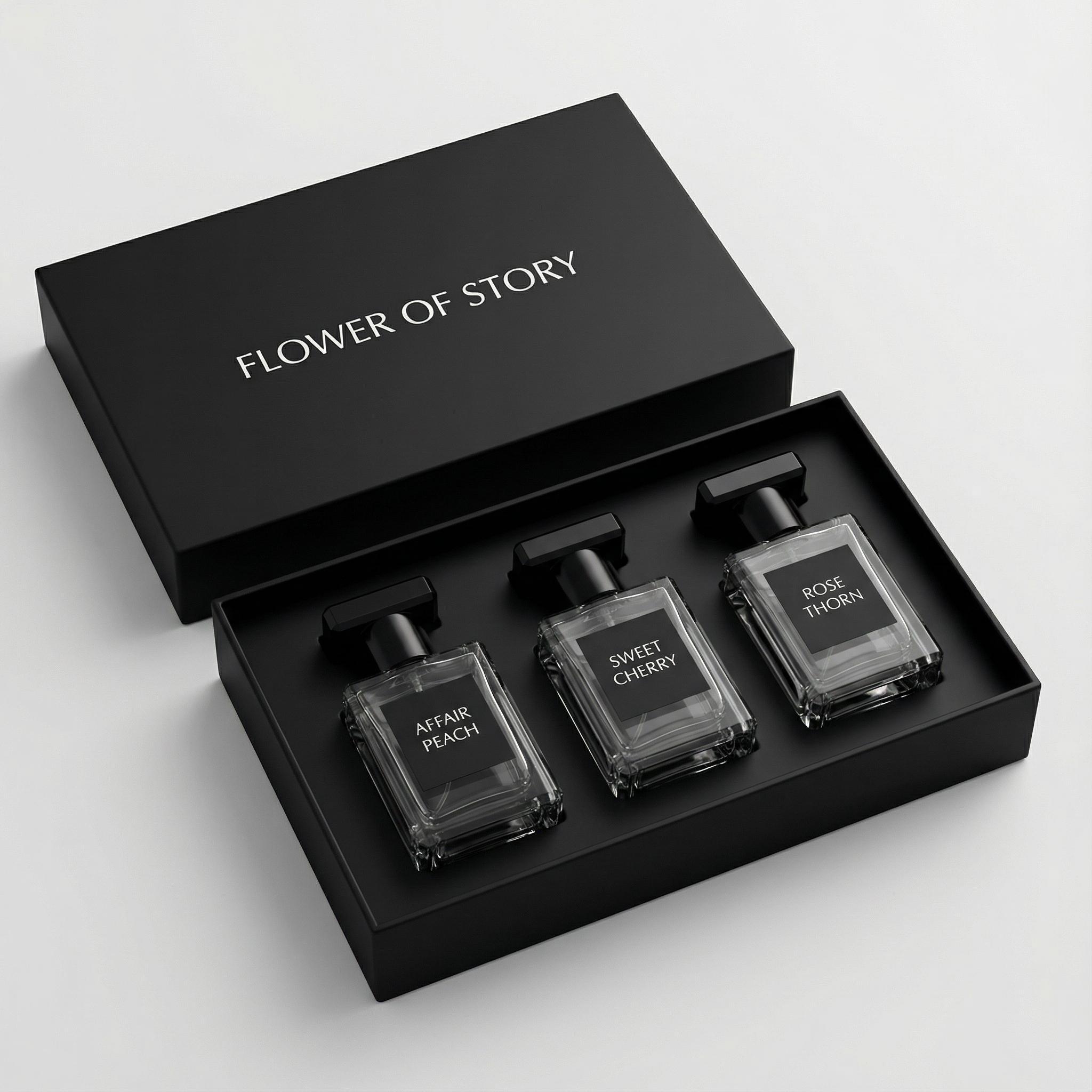
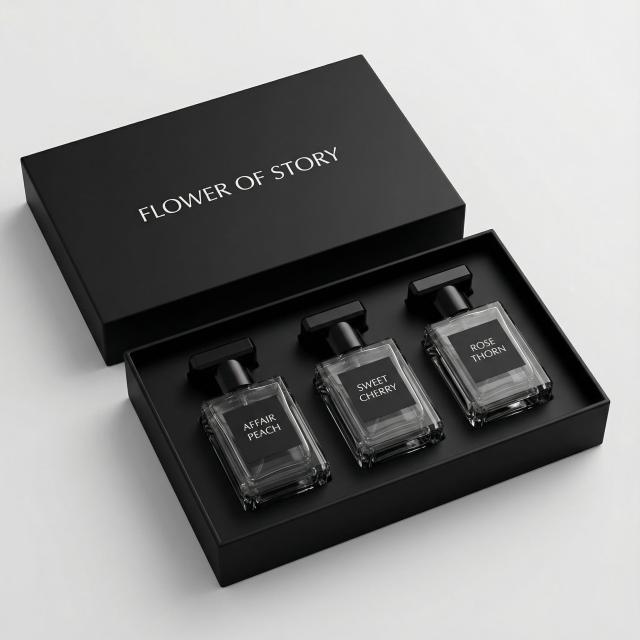
Matte lamination is the most requested. It takes the reflection off the panel, holds colour density, and resists the fingerprints that appear quickly on a box handled in store. Matte finish perfume packaging also photographs well, because the panel does not throw a hard highlight back at the camera.
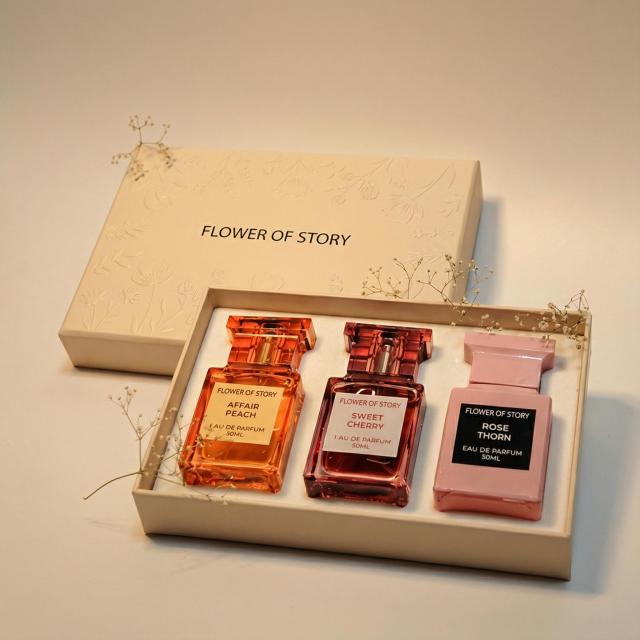
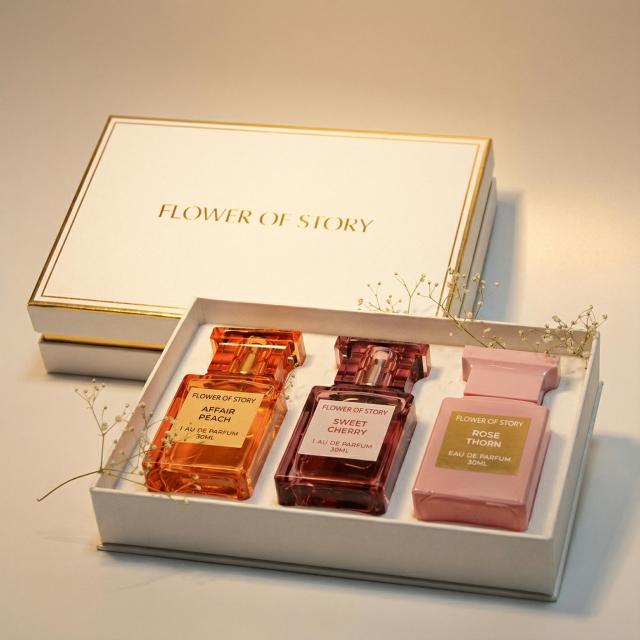
Hot stamping adds a metallic mark — gold, silver, matte gold, matte silver, holographic or antique copper — and is usually kept for the logo, a fragrance name or a fine rule. Embossing and debossing raise or recess a detail so it reads by touch as well as by sight, which matters on a lid a customer picks up before reading anything.
Spot UV and gloss lamination give the opposite effect: a gloss element against a matte panel, so one mark catches the light without changing the overall look. Where the brief calls for rigid perfume packaging that has to read as expensive at arm's length, a matte panel with one crisp foil or embossed detail usually achieves more than covering the whole lid in effects.
Two practical points. Finishing runs after printing, so the artwork has to place the foil and emboss areas precisely, and we send a flat preview with those positions marked. And a deep emboss under a large foil area can soften fine detail, so that combination is proofed rather than assumed.
Production and Quality Control
Production starts once the sample is approved. Artwork is locked, paper and board are bought in for the run, the dieline is prepared, and the press is set up with a trial print before the full sheet goes through.
Printing runs with in-process checks: colour difference, print clarity and artwork position are watched on the sheet, not only at the end of the run. Surface finishing follows — lamination, foil stamping, embossing or debossing, UV and die-cutting, in whatever combination the job specifies. Matte finish perfume packaging is checked at this stage for sheen and for any marks picked up during handling.
Forming and assembly come next. Gluing, wrapping and insert placement combine manual work and machine work depending on the structure; on custom lid and base boxes finished by hand, this is the step that decides how the reveal looks. Finished boxes are then inspected for colour difference, damage, weak glue, size deviation and visible appearance faults.
Before dispatch, quantity, packing and shipping marks are checked against the order and cartons are protected for transit. Production files, the dieline and the finishing specification are kept, so a repeat run of wholesale square perfume boxes comes off the same standard rather than being rebuilt from scratch.
Quality control sits at four points: incoming paper, ink and accessories; in-process checks during printing, die-cutting and gluing; finished-goods inspection; and an outgoing check of order details and packing.
Use Scenarios
- Flagship launch on a department-store shelf. Level stacking and neat facing matter, so the square footprint and even reveal do most of the work. A luxury perfume box that has to sit under spot lighting benefits from a matte panel with one foil or embossed accent.
- Limited editions and gift sets. The rigid board protects glass through handling while stamping and embossing carry the storytelling. A printed sleeve or belly band can add a seasonal layer over the box.
- Duty-free and travel-channel distribution. Narrow shelving and small display areas reward a compact square box that still reads premium at a glance.
- Third-party fulfilment and cross-border shipping. Consistent dimensions improve master-carton cube, barcode and batch labels go on a flat panel, and the friction-fit lid keeps the bottle in place through multi-node handling. For wholesale square perfume boxes moving through several markets at once, the same dieline keeps packaging identical in every warehouse.
- Subscription and gift-with-purchase programmes. A smaller square format gives a travel bottle or sample the same presentation as the full-size pack.
- Press kits and influencer mailers. The opening is the moment: lid off, bottle seated, insert holding it steady for the photograph.
Specifications
| Specification | Detail |
|---|
| Material | Biodegradable recycled paper laminated over rigid cardboard |
| Build | Two-piece square lid and base with hand-finished edges |
| Closure | Fitted friction fit |
| Print | CMYK, full-panel coverage |
| Size | Custom, built to your bottle dimensions |
| Board thickness | Custom, matched to bottle weight and protection needs |
| Interior | Inserts and wraps planned within the dieline |
| Assembly | Hand assembly, no tools needed |
Customization Options
- Size and proportions. Footprint and height are built to your bottle, with clearance set for the closure and any insert. The square footprint can be kept or adjusted.
- Board thickness. Chosen against bottle weight and how the box will ship, then checked on the sample.
- Structure. Lid depth, base depth and how the two seat together. Every version is built as custom lid and base boxes against one dieline, so a change is a revision of that file rather than a new build.
- Print. Full-coverage CMYK as standard, with Pantone spot colour where a brand colour has to hit exactly.
- Surface finishing. Matte lamination, embossing, debossing, hot stamping, spot UV and gloss lamination, alone or combined.
- Logo and brand marks. Position and size on the lid, the base or the inside panel, including a mark that runs across an edge.
- Interior. Inserts and wraps planned within the dieline, plus space for a barcode, batch code or regulatory panel on a flat area.
- Colour development. Brand colours are matched against a colour card and a physical proof before the run, not against a screen.
- Artwork. Vector files in AI, CDR or PDF; we supply the dieline and a flat preview so text, dimensions and finish positions can be checked.
- As custom rigid perfume box manufacturers we start from your artwork and your bottle rather than from a catalogue shape, so a special proportion or an unusual lid depth is a conversation rather than a refusal.
Ordering and Delivery
- Minimum order quantity. 500 pieces.
- Sampling. A physical sample is made before bulk production, usually within about 7 days.
- Bulk lead time. Typically 15–25 days after artwork and sample approval.
- Unit price. From $1.86 per unit, varying with specification and quantity.
- Shipping. Sea, air, truck and express freight; full Incoterms available.
- Reorder continuity. The dieline, colour target and finishing specification stay on file, which is how custom rigid perfume box manufacturers keep a second run identical to the first.
- What to send for a quote. Box size or bottle dimensions, quantity, material preference, printing and finishing requirements, destination market and artwork if available — send these and we will come back with a costed specification and a dieline for checking.
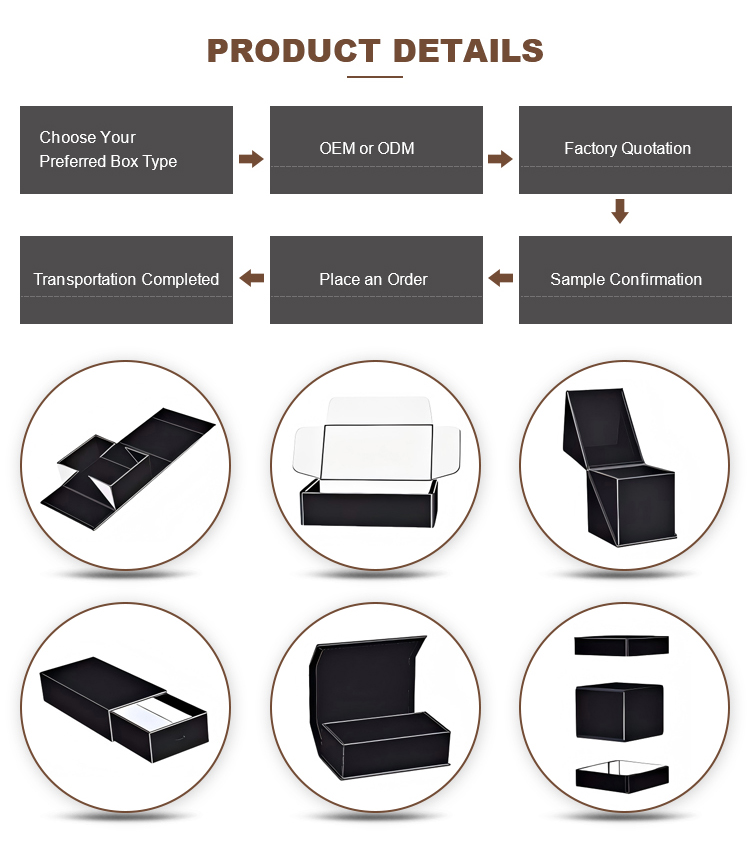
- 1. Send the brief: box dimensions or bottle size, material preference, printing and finishing requirements, quantity, destination market, and artwork in AI, CDR or PDF vector format where you have it.
- Check the dieline and flat preview: we prepare the dieline with finishing positions marked, and you confirm text, graphics, dimensions and exactly where each finish falls.
- Approve a physical sample: a machine-made sample is produced to the confirmed file so the material, print result, structure and finishing can be judged in the hand.
- Review the sample QC: size, colour difference, finishing position and structure are checked before the sample leaves us.
- Lock the file: once you sign off, the production file is locked for bulk. If something needs changing, small revisions can be made and a second sample arranged.
Testing & Compliance
Compliance paperwork should not hold up a launch. The paperboard we buy in for production goes through third-party laboratory testing, and results have met the requirements set for each programme: PFAS, SVHC under REACH, RoHS heavy metals, EN 71-3, CPSIA and ISO 8124-3, along with phthalates, halogen and formaldehyde. FSC chain-of-custody documentation is available where your programme needs certified fibre. Tell us your destination market and what your buyer requires, and we will confirm which reports apply and send copies with your quotation.
FAQ
What should I check when comparing recycled perfume packaging suppliers?
Look at where the recycled material actually sits. On this box the recycled content is in the printed wrap on the outside, where it is seen and touched, while a rigid core holds the shape. Ask for a physical sample around your own bottle, look at how the print sits on the recycled sheet, and confirm which components your sustainability wording will cover before you publish it.
How tight should the lid fit on custom lid and base boxes?
The lid should lift with light, steady pressure and settle back without a wobble. Tension is set by lid depth and board thickness, and it is checked on the physical sample with your bottle in the base. If your team opens and closes the box repeatedly during packing or in store, tell us at sampling so the fit can be adjusted for that handling.
Can embossing, foil and matte lamination be combined on one box?
Yes, and the usual order is print, then lamination, then foil or emboss. Keep in mind that a deep emboss sitting under a large foil area can blur fine detail, so that combination is proofed before the run. Matte lamination under a foil mark gives the cleanest contrast, because the panel stays flat while the metal catches the light.
How should I prepare artwork for a luxury perfume box?
Send vector files in AI, CDR or PDF with fonts outlined and images at print resolution. We supply the dieline and a flat preview with the finishing positions marked, so you can check text, dimensions and where the logo falls across the lid edge. Barcodes, batch codes and regulatory panels should sit on a flat area rather than across a fold so they stay scannable.
What board thickness should I choose for my bottle?
It follows the bottle. A heavier flacon needs a stiffer wall and a deeper base than a small travel bottle, and the board also has to hold up in whichever parcel or distribution channel the box travels through. Give us the bottle weight and dimensions and we will recommend a thickness, then confirm it in the hand at sampling.
How does matte finish perfume packaging hold up in store?
Matte lamination cuts reflection and resists fingerprints, so a box handled repeatedly on a shelf keeps a clean appearance, and it protects the print from light scuffing. It reads as a finish rather than a coating — if you want contrast, a spot UV mark over a matte panel gives a gloss detail without changing the overall look.